
Bent Oak Dining Table
I was approached by a lovely client in Highgate, London wanting a dining table for her basement kitchen and dining area. The brief was quite freeing - I just had to deliver a table with a bit of a difference. The frame of this table is inspired by rattan furniture from the 1970s with flowing curves meeting together in bundles - easy with rattan, fiendishly difficult with English Oak. But I love a challenge.
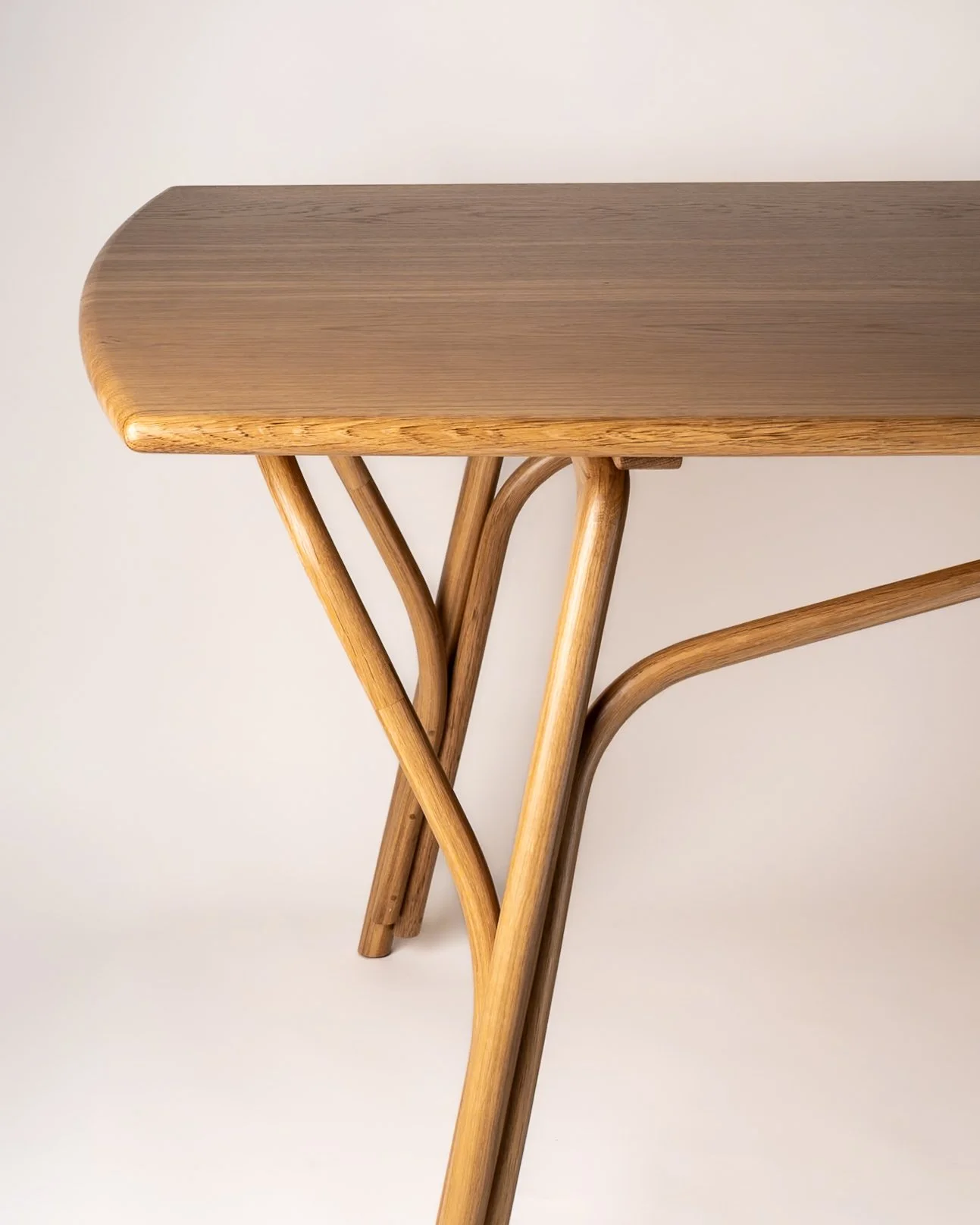
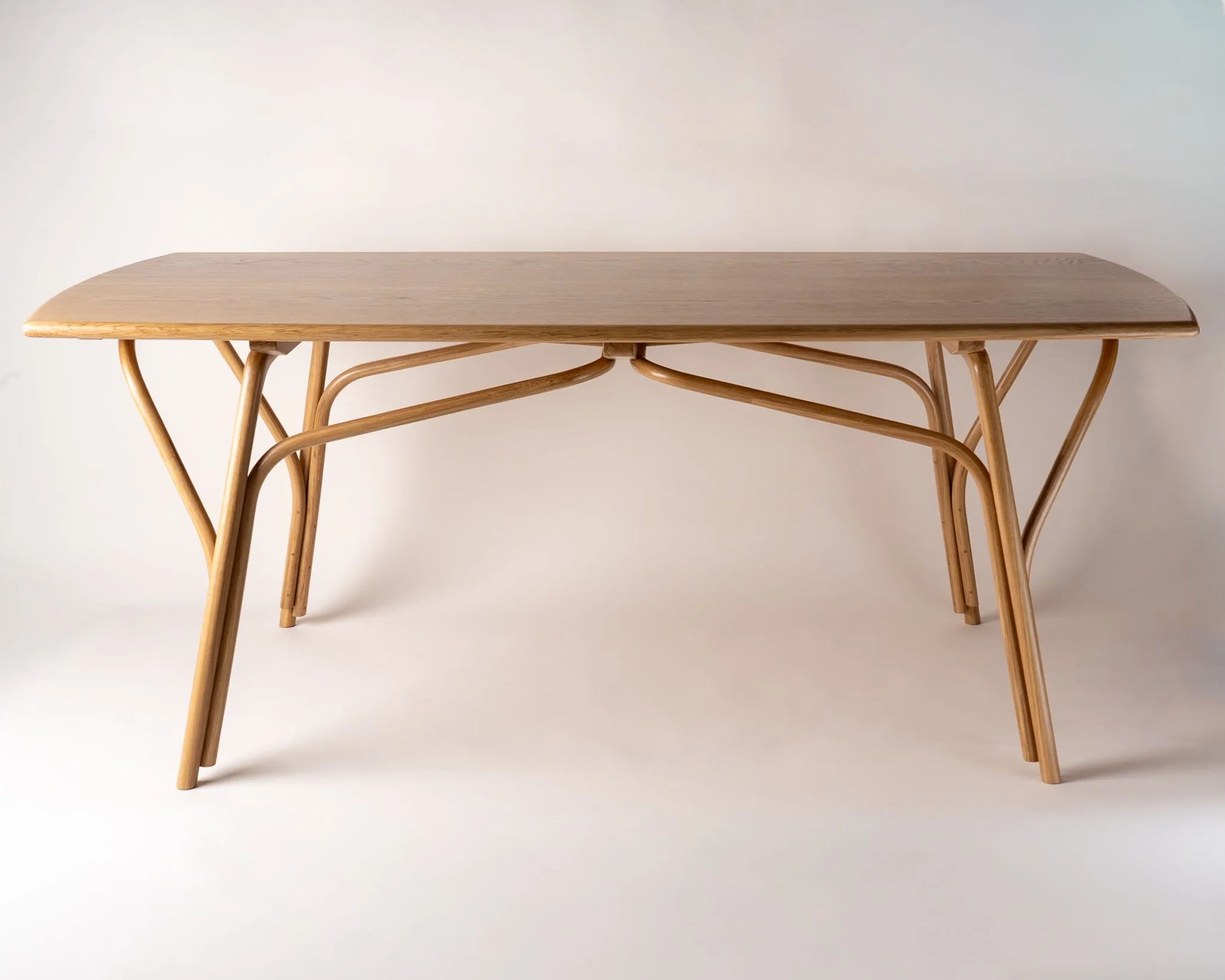
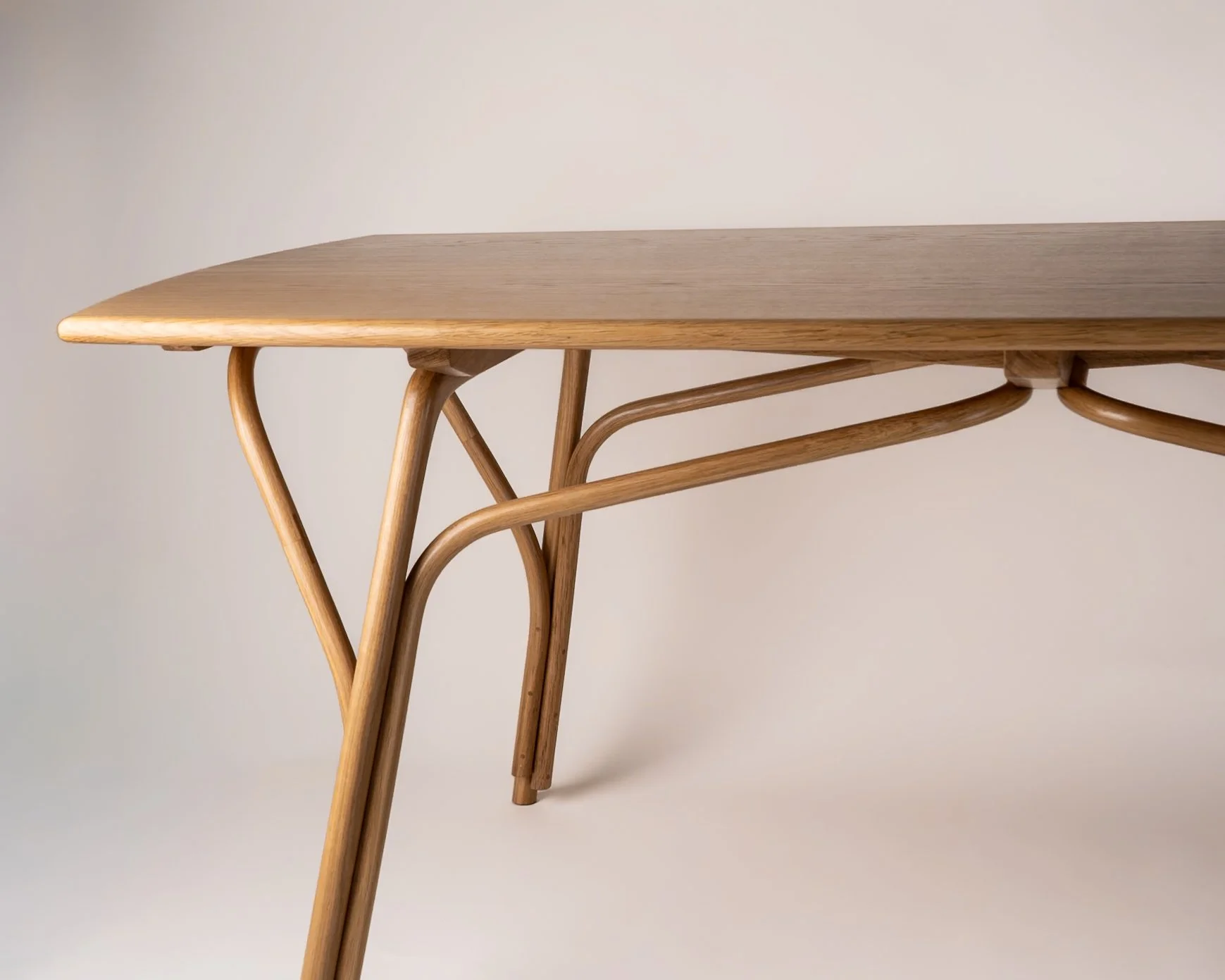
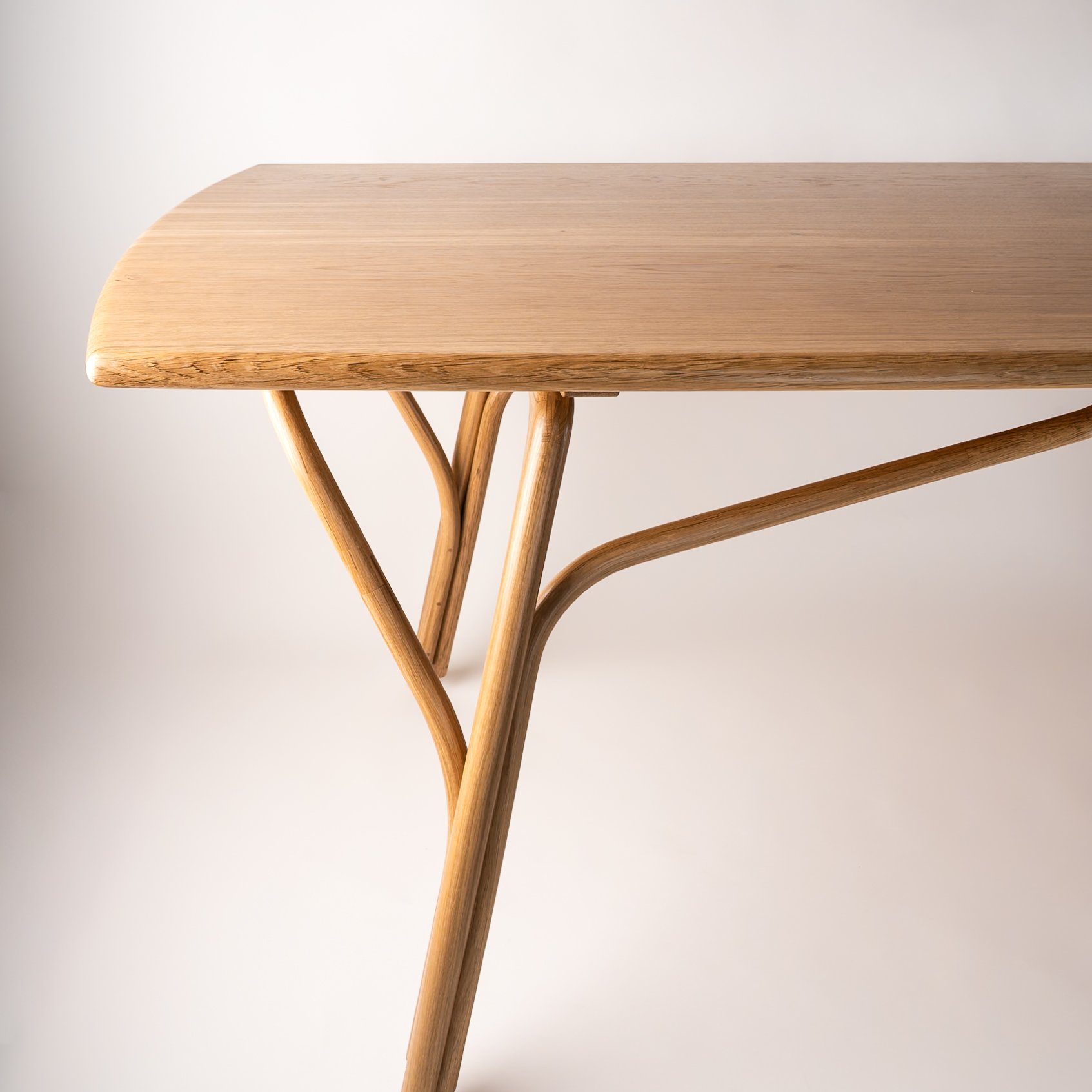
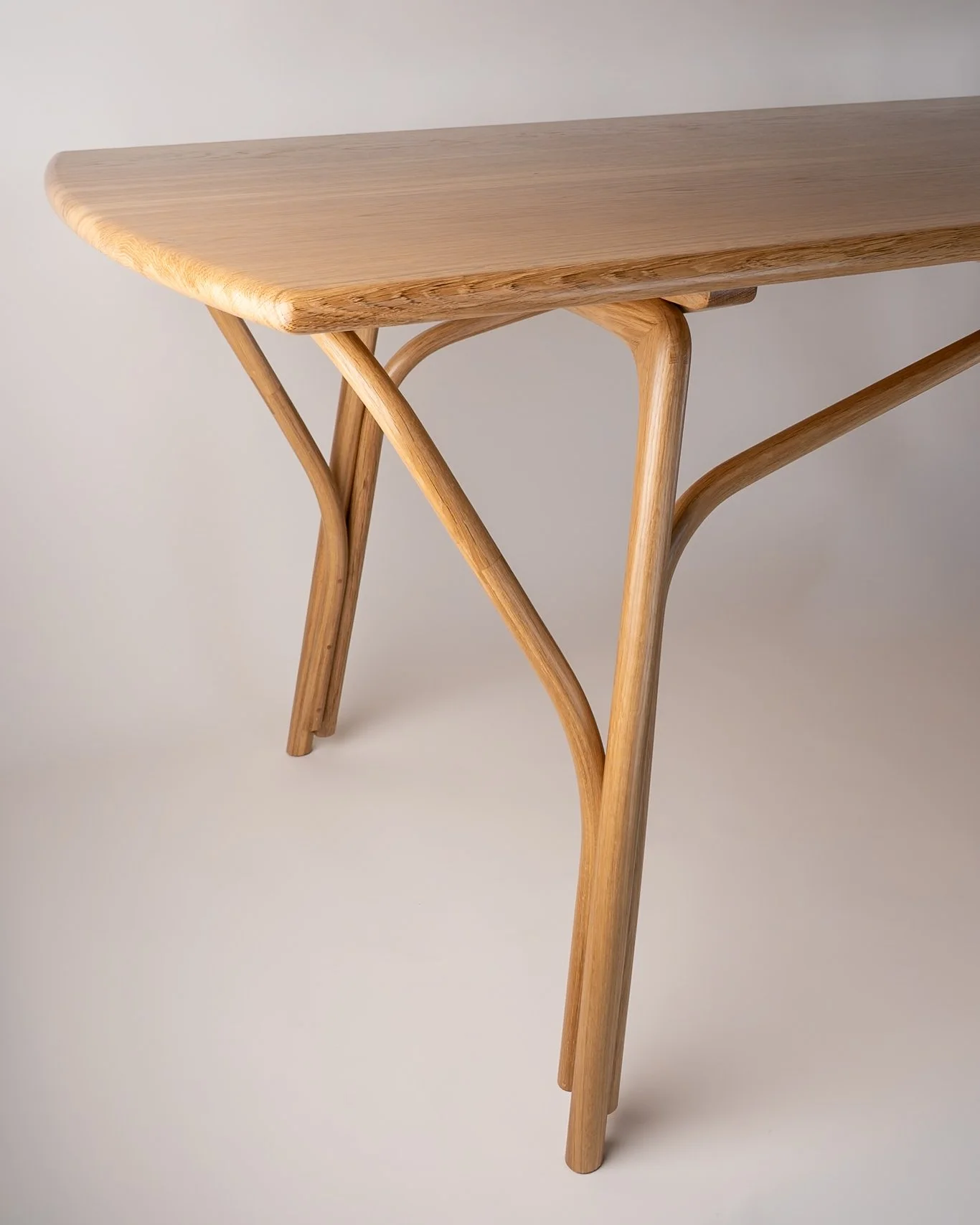
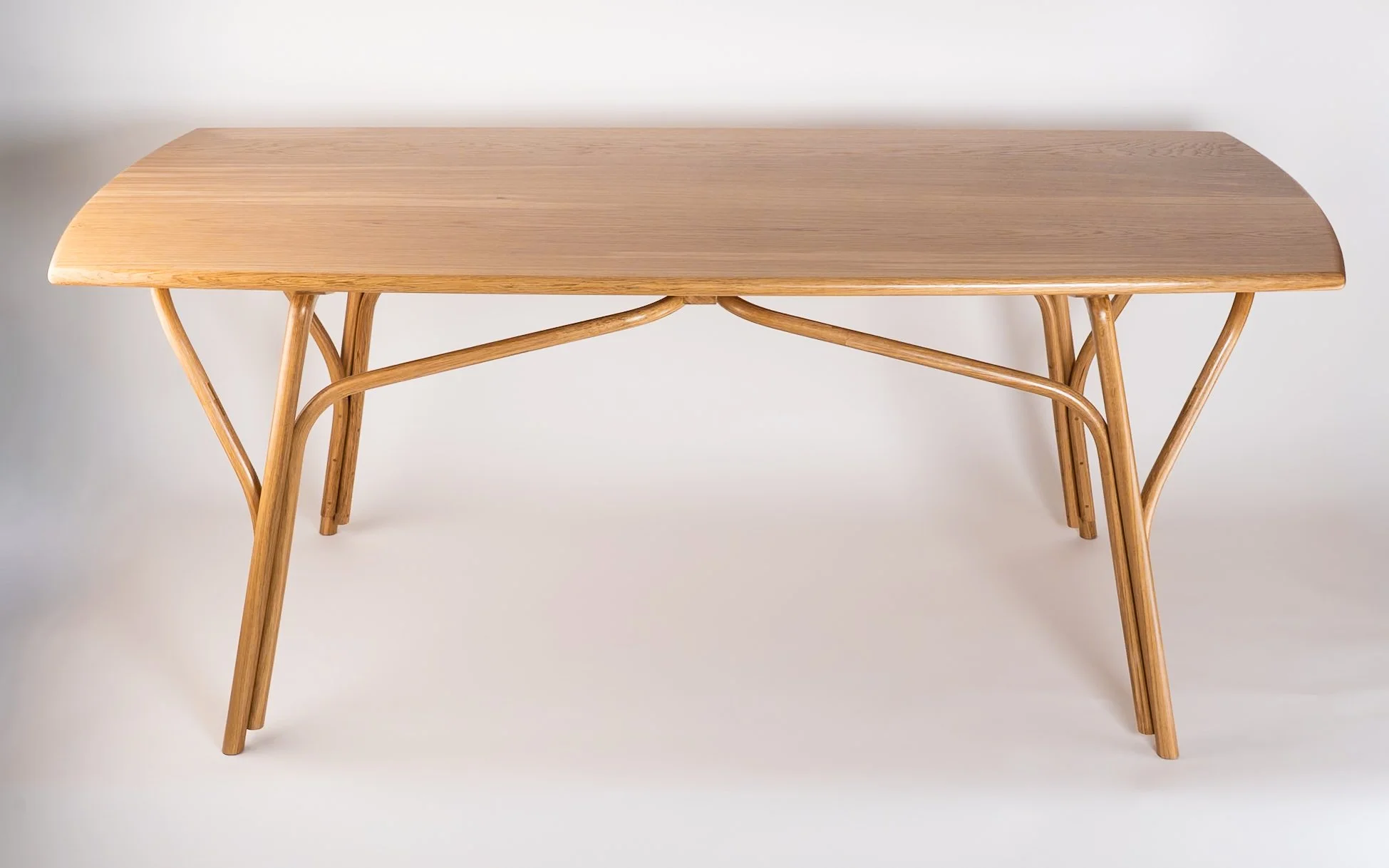
There are 3 sections to each side of the leg frame, mirrored through the centre. The end of each section straightens as it reaches the floor and coalesces with the other limbs. Under the table each section fits into notches in the central spine to provide stability. On its own, each leg section is highly unstable, but when joined to its partners all of the forces are resolved to allow the top to sit stably on its slender legs.
It would be a pretty simple endeavour (if a very inefficient use of timber) to cut each of these curves from a single board. However, the grain “run-out” would leave a section of the leg extremely weak and prone to breaking. For optimum strength, the grain of the timber needs to flow around the curve resulting in the strongest component. This is achieved through stack lamination - a straight board is cut into 5 or 6 thin strips, then bent and glued together using a shaped former. The result is a rigid curved component, and the glue lines are near invisible if executed well.