
Where does the timber I use come from?
I’ve fielded a lot of questions over recent months about where the timber I use for my furniture comes from. I decided a while ago that I wanted to support British timber, which as an industry has been neglected and unsupported for many many years. A great deal of my timber now comes from the fantastic guys at Fallen & Felled, who have kindly given me permission to use their images to show the process involved in turning a tree into furniture.

Felling
Trees in London are felled for a number of reasons - they have reached the end of their life, are storm damaged, are damaging properties or need to be removed for development.
Expert tree surgeons fell the tree and ready it for transportation.

Removal
The trunk and major stems are cut down to manageable pieces for transport. These sections will determine the length of the boards available once the timber has been milled and dried.

Milling
Each section is loaded onto the mill, squared up and then milled for a specific use or to maximise the yield from the timber. This may result in boards from 25-80mm in thickness for a variety of uses.
This is a highly skilled operation, as the way the tree is milled will have aesthetic and practical consequences, in terms of whether the grain runs radially or tangentially through the board.
Drying
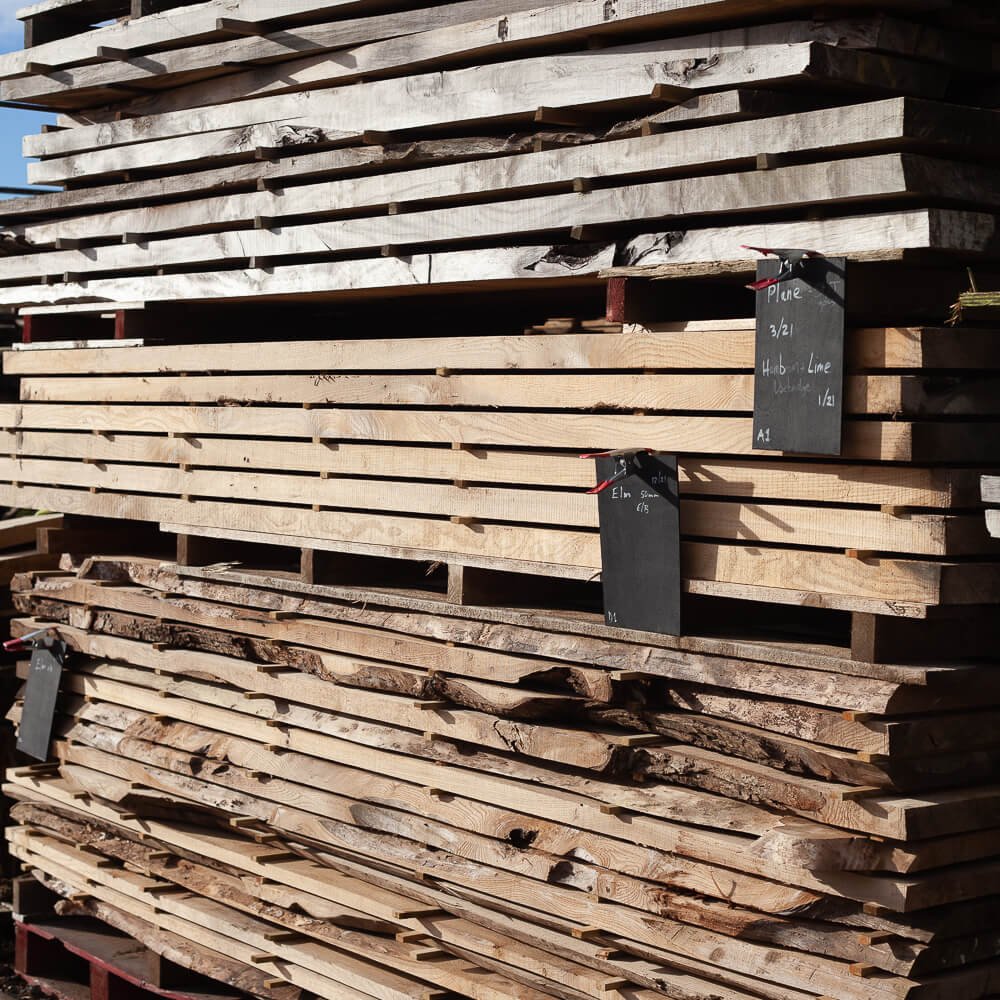
Once the timber has been milled, it is ‘stickered’ - small pieces of wood added between each board, and left to dry. Stickering allows airflow around all sides of the board to let the board dry evenly and prevent cupping.
It is necessary that the boards are thoroughly dried, else they may be dimensionally unstable, weak and more prone to decay.
Each board will spend roughly a year air-drying for every inch of thickness. After this it is ready for a week in the kiln, where the moisture content is brought down to its final level. Many industrial timber mills will kiln dry only, but this tends to leave brittle timber with more cracks, and also prone to case hardening, where the outside is dry but the inside still too moist.

Board Selection
It is at this stage that the timber is ready to be racked and sold. Small-scale mills like Fallen & Felled allow craftsmen like Knot the time and space to select the perfect boards for each project, to maximise the grain pattern and match to other boards, and to minimise wastage.

Flattening & Squaring
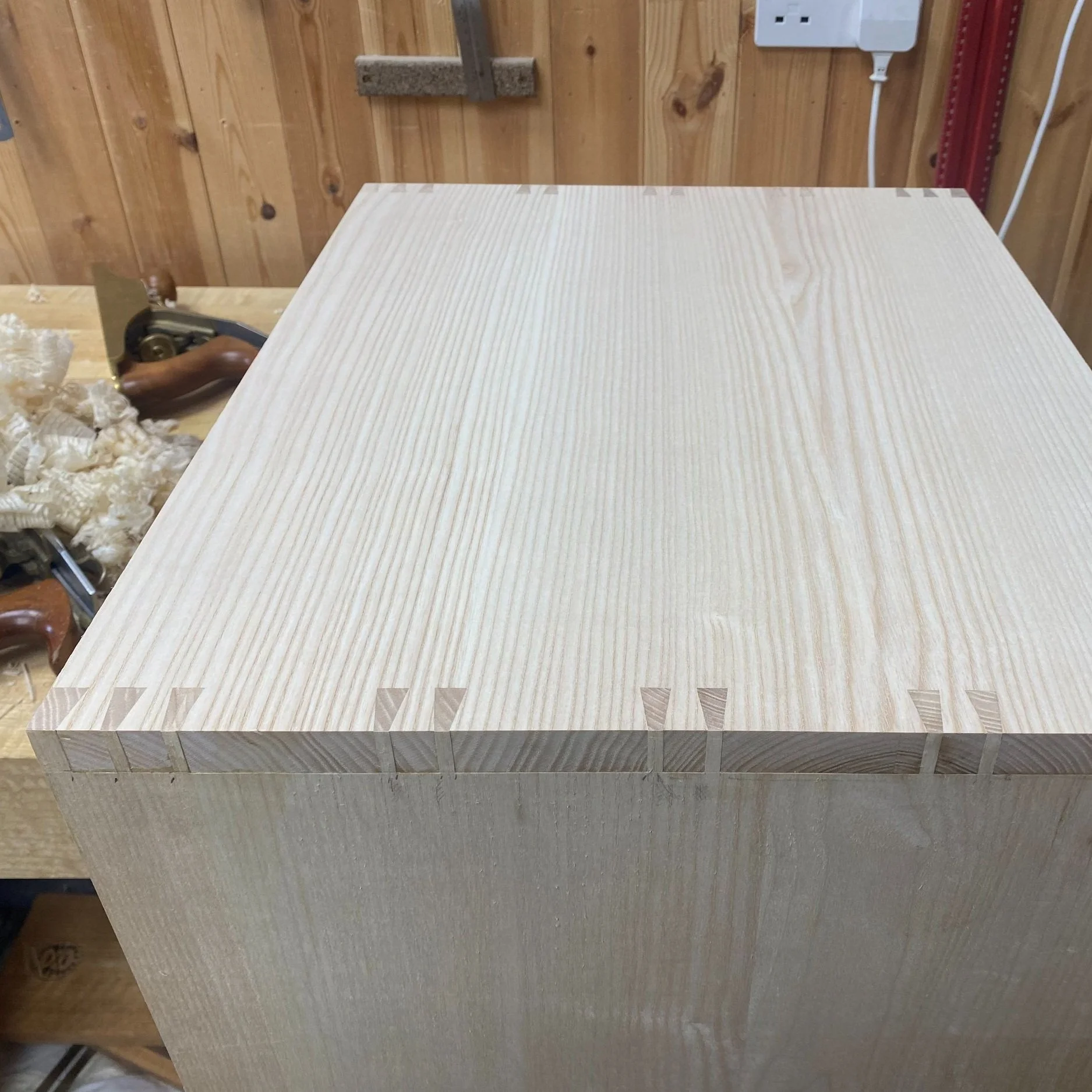
Once selected, the components are cut out in the optimal way, then each part needs to be flattened to provide a smooth, flat surface. These are then squared up, to give a new face perpendicular to the first, then dimensioned to give a selection of parts in their final sizes.
Furniture making
Its at this stage that the timber is nearing the completion of its journey and is starting to resemble the finished piece. For a furniture maker like Knot, the work is only just beginning.
But thats a post for another day….
Want to commission your own unique furniture piece from these amazing trees, then get in touch today to get the ball rolling.